
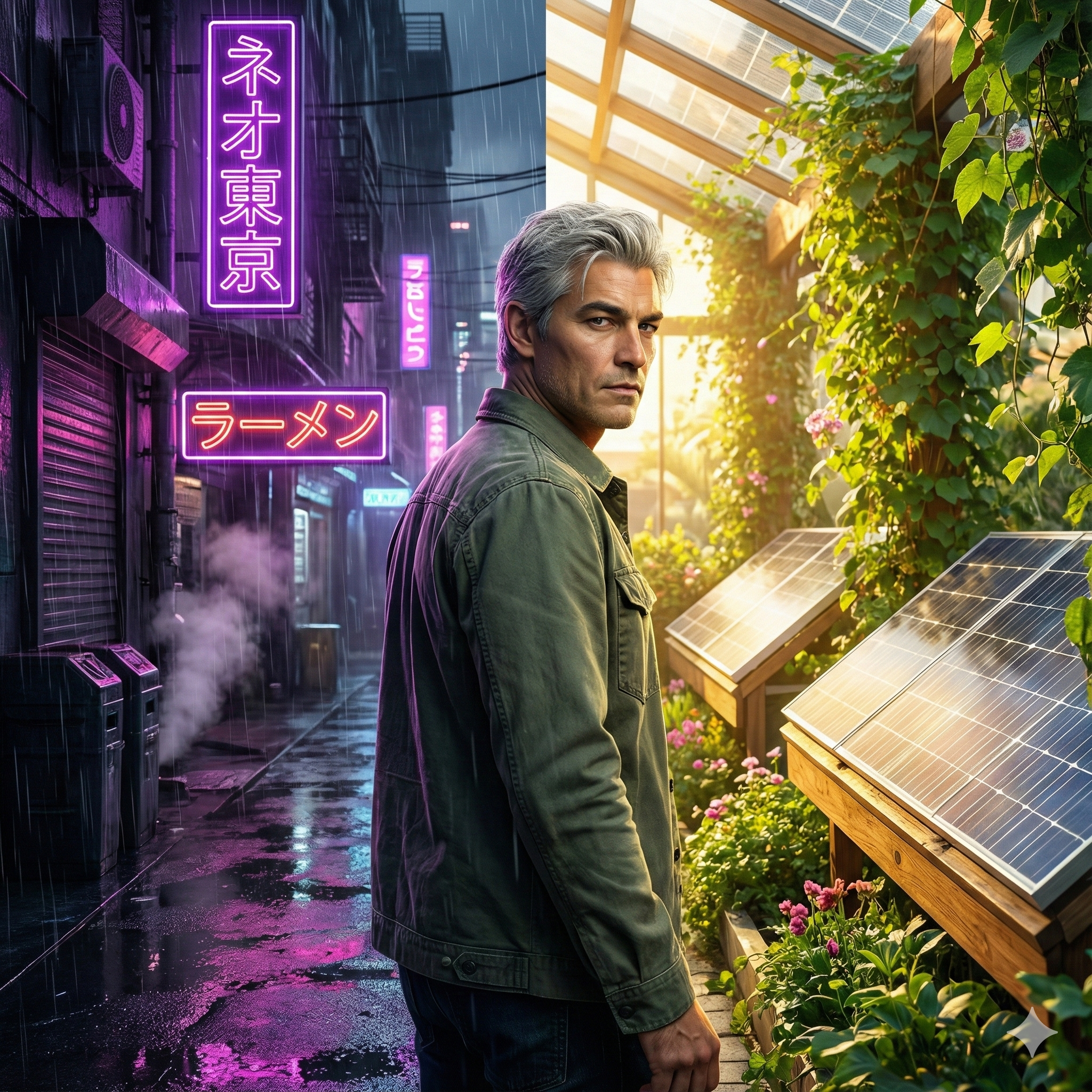
I grew up in the rain. Not real rain, but the digital rain of Chiba City.
Like so many of us, I fell in love with Science Fiction through the lens of Cyberpunk. We were seduced by the “High Tech, Low Life” aesthetic. We loved the chrome, the neon, and the cynical anti-heroes fighting corporate overlords in a world that had already ended.
It was cool. It was gritty. And for a long time, it felt like a warning.
The Book That Started It All
If you want to understand where I came from, you have to read the book that started the genre: Neuromancer by William Gibson.
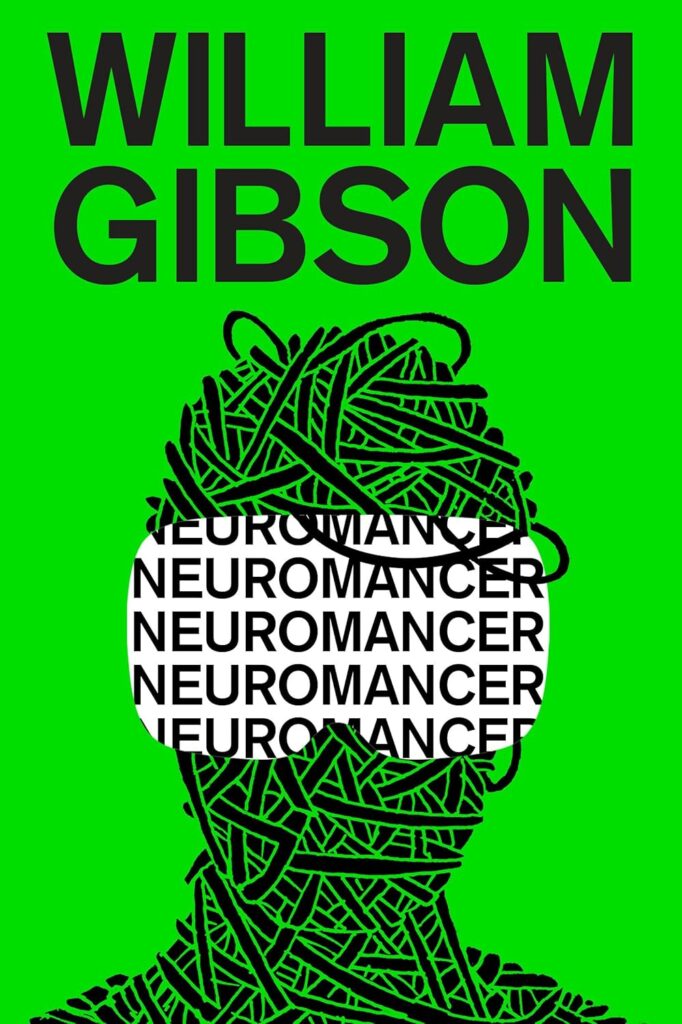
Gibson showed us a world where the sky was “the color of television, tuned to a dead channel.” It was a masterpiece of style and despair. When I started writing The Glitch Prince Saga, this was the energy I wanted to capture. Hikaru Genji began his life as a Cyberpunk hero—fighting glitches in a broken system.
I write from a remote, off-grid outpost at the edge of the world. When the power goes out here, it’s not a plot point; it’s a reality.
When the supply chain breaks, we don’t hack a mainframe; we fix a generator.
Living here, watching the real world struggle with pollution and energy, I realized something. I was tired of writing about how the world ends.
I wanted to write about how we fix it.
I started looking for a new kind of sci-fi. I found Solarpunk.
Unlike Cyberpunk, which revels in the collapse, Solarpunk asks a harder question: What does it look like when we win?
It’s not about going back to the Stone Age. It’s about using High Technology—AI, Biotech, Advanced Materials—to integrate with nature rather than destroy it.
The best entry point I found for this genre is A Psalm for the Wild-Built by Becky Chambers.

It’s a story about a monk and a robot drinking tea in a world that healed itself. It is gentle, philosophical, and deeply hopeful.
My Evolution
But I am not Becky Chambers. And Hikaru Genji is not a monk.
I realized my saga needed to bridge the gap. I needed to take Genji from the darkness of Neuromancer to the light of Solarpunk.
That is why I wrote Book 5: EVOLUTION: LOVE FOR LIFE.
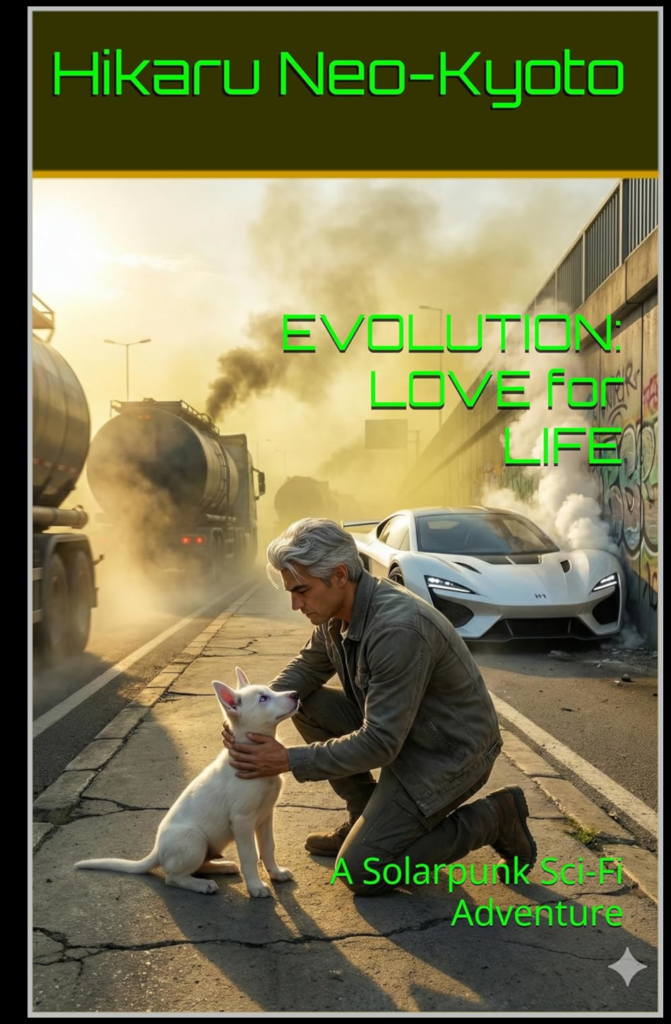
In this new book, Genji trades his katana for Green Hydrogen and Cold Fusion. He teams up with Aoi, a bio-engineer who prints armor from thin air using Chemputation, and Kiri, a white Belgian Malinois puppy who proves that biology is the ultimate technology.
We explore Self-Repairing Materials (because in a sustainable future, things shouldn’t break). We explore Infinite Energy (because scarcity is the root of tyranny).
I didn’t stop writing Cyberpunk because I hated it. I stopped because I wanted to evolve. I wanted to dream of a future where we are proud to be human (or post-human).
Join the Evolution
If you loved the grit of my earlier books, don’t worry—the Lithium Lords are still dangerous enemies. But this time, we aren’t just fighting to survive. We are fighting to live.
What do you think? Is the future Neon or Green? Let me know in the comments.